
WHEN: March 2012
WHERE: United States (east of the Rockies)

I have been a "weather junkie" of sorts, for at least the past 8 years, beginning in college when I took a couple related courses. In those 8 years, I don't recall many (if any) "out-of-season" heat waves being more intense, AND prolonged, AND widespread as the one we have experienced these past two weeks. The title of this post may sound catchy or cliche but it's not so far from the reality it seemingly distorts.
If you live anywhere east of the Rockies, chances are (very good) you have been experiencing some record-breaking (shattering) warmth during the past two weeks. This current heat wave (or 'tsunami', as I call it), began to take effect on or around March 10, was full-blown by March 14, and since then has dominated the weather patterns throughout the eastern two-thirds of the country. I realize you don't need me to tell you that it's been warm where you live. And you've likely heard many stats and stories about the rarities of the "extreme weather" from local news, the internet, or other sources. The aim here is to put my own twist on it and perhaps provide a more comprehensive context for just how extreme and significant these past two week's weather has been.
First off, just check out some of the recent highs for mid-March (remember, it isn't May yet)!
 Highs on March 17
 Highs on March 19
 Highs on March 21
Places like International Falls, Minnesota (the unofficial "ice box of the nation") and the Upper Peninsula of Michigan have seen highs this past week that are warmer than the average high there in July! And let's not forget that the first day of spring was March 20, meaning that the bulk of this heat "tsunami" occurred during winter. Maybe the title "May in March" is a lot less fanciful than it may seem. I thought "Summer in Winter" may be a little too extreme. But I'd be lying if I said it didn't cross my mind.

It's May (in March)!
The graphic above is from a website I often reference as I keep tabs on weather trends and extremes in my home state of Iowa. The graphic was generated on March 13, before the extent of this heat wave was fully known and appreciated. Even still, it shows that the forecast temperatures (for Ames, Iowa) were going to be more characteristic of the average highs (or "feels like date") in May and even June - for several days.
Is it time to plant corn in Iowa?
US departures from normal (March 13-21)
 Go north for Spring Break!
I also made the above graph to compare the relative warmth among various locations across the US (north and south). These curves represent 7-day averages for the respective city.
While most cities have remained warm (and above average) these past two weeks, it is obvious that those areas in the northern tier of the country have seen the greatest relative warm-up this month. As of March 21, my hometown of Waterloo (green line) had a higher 7-day average than San Antonio, Texas (orange line), rising almost 50° over the past two weeks! On March 20, the 7-day average high for Waterloo was 79.1°, which is equivalent to the average there for early June. In Minneapolis, a record maximum (for either the daily high or low) has been set every day except for one, from March 10-22. Nearly thirteen days of consecutive records! Similar cases litter the northern tier of the country. I can just imagine the feeling those on spring break down south who are from northern states are/were probably feeling this week and last. Probably gipped!
Believe it or not, in some cases the low temperatures have been even more extreme than the high temperatures, compared to average. For example, the low temperature in Rochester, Minnesota on March 18 (61°) was higher than the record high (60°) for that day! (Records for Rochester go back to 1886.) Subsequently, the high in Rochester, MN on March 18 was 80°, thereforebreaking shattering OBLITERATING the old record by 20 degrees!
People, hear me out, that's just unheard of!
 Minneapolis (KMSP) 14-day temperature plot (March 9-22)
As illustrated in the above graphic, the absolute lows have been so relatively high (got that?) recently, that the temperature in Minneapolis (red line) has never dropped below the average high (top blue line) since March 9.
 5-day average high and low temperatures and respective anomalies (March 16-20)
The graphic above (5-day averages) shows the departure from average for both highs and lows. As you can tell, the departures (anomalies) are completely and literally off the charts! For example, let me translate the upper right graphic, in case you can't read the small font, or can't make sense of all the lines and colors in the low-resolution image...or you just don't care to look! :) For the 5-day period (March 16-20), the average high temperature was +32° above average in and around Iowa. The legend only goes to +16° above average, which most places east of the Rockies were above. The legends were almost useless!
 Plenty of warmth down South too!
Though the heat wave has not been as relatively drastic for us here in Charleston, the relentless warmth has managed to jettison our 7-day average (or any measurement, for that matter) way up, over the past week or two. Our 7-day average (green line) rose from 68.4° on March 10 to 83.4° by March 20 (a 15° increase). That 7-day average in Charleston on March 20 was equivalent to the average for mid-May. Again, hence the not-so-cliche title of this post.

This graphic shows a stark contrast between the US weekly average temperature of "Week 1" (March 4-10) and "Week 2" (March 11-17).
So what has all this warmth done?
Well, first of all, as you can image, it has broken records all over the country. January and February have also been well-above average months this year across much of the country, but nothing like March has been. During the month of January, 594 high temperature records were either tied or broken. In February, 216 were tied or broken. However, in just the first 18 days of March, already 918 records have been tied or broken (see graphic below). That doesn't even include the past 4 days of record-setting warmth, which would easily raise the monthly record count to over 1,000.

High temperature records tied or broken per month in 2012 (through March 18).

PBS, in coordination with the National Climactic Data Center, created a new widget in 2011 that monitors high temperature records every year (since 2000). Over the past 12 years, 2011 saw the most high temperature records tied or broken (6,349), with 2012 on pace to surpass 2011. At least 100 records were tied/broken each day for March 14-18 this year (617 in that 5 day period alone). That equates to 9.7% of 2011's records, in just 5 days (or 1.4% of the year)!
Sorry for that overwhelming string of percentages and numbers. Stop reading if you're dizzy.

The widget (seen above) is updated daily and shows both the distribution of the daily records, as well as stats for the current month and year. The widget has been very colorful these past two weeks!
 The current records count by state for 2012 (through March 18). California leads the way, but with the perpetual extreme weather there, the highly variable geography, and relative size of that state, it's little wonder. However, the next 7 states lie within the Great Lakes and Upper Midwest regions.
The record warmth has also been busy melting snow and changing the winter-spring landscape...

 Snow cover on March 4
 Snow cover on March 11
 Snow cover on March 18
On a related note, a quick look back shows the marked difference between March 2012 and March 2011. Below is a comparison of snow cover on March 15, both in 2011 and 2012. The difference is unmistakeable. One year March is winter, the next it is spring.

Snow cover on March 15, 2011

WHERE: United States (east of the Rockies)
If you've read this blog for a while (or are any member of my immediate family), you know there is one thing I find great interest in and (too?) often blog about...

(so much so that I now make logos for it apparently)
Perhaps after a few more posts about 'extreme weather', I won't have to preface every such post with an introduction like this. I suppose I still offer such prefaces both for those who may not know of this hobby of mine (some may call it an obsession), as well as a subtle warning like, "Hey, if you don't care a lick about weather, extreme or otherwise, you may not want to spend your time reading this". (NOTE: If you're color blind or epileptic, you may also want to steer clear of this post.) So there - there's my obligatory introduction. Now on to the "extremities of atmospheric phenomena"!
(It's not as bad as it sounds - I'm just a bad salesman of my posts.)
I have been a "weather junkie" of sorts, for at least the past 8 years, beginning in college when I took a couple related courses. In those 8 years, I don't recall many (if any) "out-of-season" heat waves being more intense, AND prolonged, AND widespread as the one we have experienced these past two weeks. The title of this post may sound catchy or cliche but it's not so far from the reality it seemingly distorts.
If you live anywhere east of the Rockies, chances are (very good) you have been experiencing some record-breaking (shattering) warmth during the past two weeks. This current heat wave (or 'tsunami', as I call it), began to take effect on or around March 10, was full-blown by March 14, and since then has dominated the weather patterns throughout the eastern two-thirds of the country. I realize you don't need me to tell you that it's been warm where you live. And you've likely heard many stats and stories about the rarities of the "extreme weather" from local news, the internet, or other sources. The aim here is to put my own twist on it and perhaps provide a more comprehensive context for just how extreme and significant these past two week's weather has been.
First off, just check out some of the recent highs for mid-March (remember, it isn't May yet)!
Places like International Falls, Minnesota (the unofficial "ice box of the nation") and the Upper Peninsula of Michigan have seen highs this past week that are warmer than the average high there in July! And let's not forget that the first day of spring was March 20, meaning that the bulk of this heat "tsunami" occurred during winter. Maybe the title "May in March" is a lot less fanciful than it may seem. I thought "Summer in Winter" may be a little too extreme. But I'd be lying if I said it didn't cross my mind.

It's May (in March)!
The graphic above is from a website I often reference as I keep tabs on weather trends and extremes in my home state of Iowa. The graphic was generated on March 13, before the extent of this heat wave was fully known and appreciated. Even still, it shows that the forecast temperatures (for Ames, Iowa) were going to be more characteristic of the average highs (or "feels like date") in May and even June - for several days.
Is it time to plant corn in Iowa?
Some locales around the Great Lakes and Upper Midwest saw day after day of highs that were +40° above normal. I created the video below to highlight the intensity, duration, and extent of the above-normal warmth over the past two weeks (March 13-21).
US departures from normal (March 13-21)

I also made the above graph to compare the relative warmth among various locations across the US (north and south). These curves represent 7-day averages for the respective city.
While most cities have remained warm (and above average) these past two weeks, it is obvious that those areas in the northern tier of the country have seen the greatest relative warm-up this month. As of March 21, my hometown of Waterloo (green line) had a higher 7-day average than San Antonio, Texas (orange line), rising almost 50° over the past two weeks! On March 20, the 7-day average high for Waterloo was 79.1°, which is equivalent to the average there for early June. In Minneapolis, a record maximum (for either the daily high or low) has been set every day except for one, from March 10-22. Nearly thirteen days of consecutive records! Similar cases litter the northern tier of the country. I can just imagine the feeling those on spring break down south who are from northern states are/were probably feeling this week and last. Probably gipped!
Believe it or not, in some cases the low temperatures have been even more extreme than the high temperatures, compared to average. For example, the low temperature in Rochester, Minnesota on March 18 (61°) was higher than the record high (60°) for that day! (Records for Rochester go back to 1886.) Subsequently, the high in Rochester, MN on March 18 was 80°, therefore
People, hear me out, that's just unheard of!
As illustrated in the above graphic, the absolute lows have been so relatively high (got that?) recently, that the temperature in Minneapolis (red line) has never dropped below the average high (top blue line) since March 9.

The graphic above (5-day averages) shows the departure from average for both highs and lows. As you can tell, the departures (anomalies) are completely and literally off the charts! For example, let me translate the upper right graphic, in case you can't read the small font, or can't make sense of all the lines and colors in the low-resolution image...or you just don't care to look! :) For the 5-day period (March 16-20), the average high temperature was +32° above average in and around Iowa. The legend only goes to +16° above average, which most places east of the Rockies were above. The legends were almost useless!

Though the heat wave has not been as relatively drastic for us here in Charleston, the relentless warmth has managed to jettison our 7-day average (or any measurement, for that matter) way up, over the past week or two. Our 7-day average (green line) rose from 68.4° on March 10 to 83.4° by March 20 (a 15° increase). That 7-day average in Charleston on March 20 was equivalent to the average for mid-May. Again, hence the not-so-cliche title of this post.

This graphic shows a stark contrast between the US weekly average temperature of "Week 1" (March 4-10) and "Week 2" (March 11-17).
So what has all this warmth done?
Well, first of all, as you can image, it has broken records all over the country. January and February have also been well-above average months this year across much of the country, but nothing like March has been. During the month of January, 594 high temperature records were either tied or broken. In February, 216 were tied or broken. However, in just the first 18 days of March, already 918 records have been tied or broken (see graphic below). That doesn't even include the past 4 days of record-setting warmth, which would easily raise the monthly record count to over 1,000.
High temperature records tied or broken per month in 2012 (through March 18).
PBS, in coordination with the National Climactic Data Center, created a new widget in 2011 that monitors high temperature records every year (since 2000). Over the past 12 years, 2011 saw the most high temperature records tied or broken (6,349), with 2012 on pace to surpass 2011. At least 100 records were tied/broken each day for March 14-18 this year (617 in that 5 day period alone). That equates to 9.7% of 2011's records, in just 5 days (or 1.4% of the year)!
Sorry for that overwhelming string of percentages and numbers. Stop reading if you're dizzy.
The widget (seen above) is updated daily and shows both the distribution of the daily records, as well as stats for the current month and year. The widget has been very colorful these past two weeks!
 The current records count by state for 2012 (through March 18). California leads the way, but with the perpetual extreme weather there, the highly variable geography, and relative size of that state, it's little wonder. However, the next 7 states lie within the Great Lakes and Upper Midwest regions.
The record warmth has also been busy melting snow and changing the winter-spring landscape...

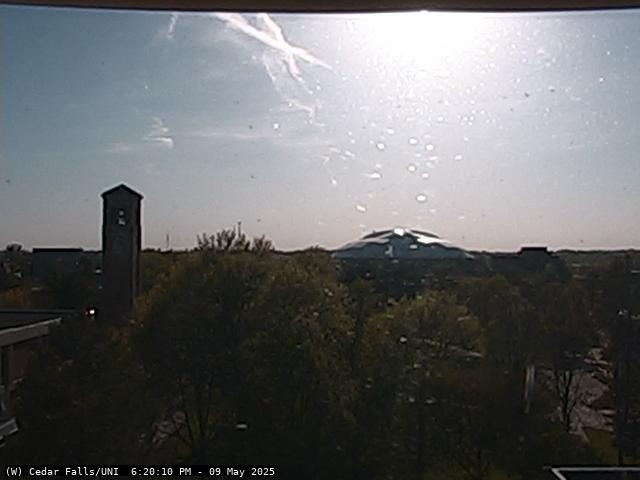
This is a comparison (over 16 days) of the seasonal landscape at the University of Northern Iowa's campus (webcam), in my hometown. Grass is greening and trees are budding 3-4 weeks early there this year.
Meanwhile, even more significant seasonal changes have been occurring. In Marquette, Michigan, for example, four feet of snow has disappeared in two weeks! On March 4 there was 47" of snow on the ground, 26" on March 11, and zero inches on March 18. Talk about a change of seasons.
Bye bye, snow!


On a related note, a quick look back shows the marked difference between March 2012 and March 2011. Below is a comparison of snow cover on March 15, both in 2011 and 2012. The difference is unmistakeable. One year March is winter, the next it is spring.

Snow cover on March 15, 2011

Snow cover on March 15, 2012
(Current snow cover for the above region, here).
And finally, back home, we here in Charleston have been thoroughly enjoying the warmth as well (just not the pollen and allergies it brings with it). We had a very warm March during this week last year, but this month has already been warmer. In fact, the average high temperature for March 14-21 this year here in Charleston (83.4°) was the warmest on record for that 7-day period (see graphic below).
 Rankings for 7-day average high (March 14-21). The "1"s signify where it was the warmest on record.
(via SERCC Perspectives Map)

A 2-week comparison of our front yard this month (March 4 and March 18)

(Current snow cover for the above region, here).
And finally, back home, we here in Charleston have been thoroughly enjoying the warmth as well (just not the pollen and allergies it brings with it). We had a very warm March during this week last year, but this month has already been warmer. In fact, the average high temperature for March 14-21 this year here in Charleston (83.4°) was the warmest on record for that 7-day period (see graphic below).

(via SERCC Perspectives Map)

A 2-week comparison of our front yard this month (March 4 and March 18)

Like I said, last year we had a very warm March as well, but as these two pictures show (March 21 of 2011 and 2012), this March is slightly ahead of last March when it comes to spring's seasonal transition.
I have barely been able to keep up with all these changes and records these past two weeks (though you may think otherwise, given all the graphics above). But as a "weather extremist", I really can't complain.
The "heat tsunami" has now calmed to a "heat wave" in most places, but the "placid waters" that are the climatological average are still no where to be found. The above to well-above average temperatures are still in the forecast for at least the foreseeable future. It makes me wonder if this will be the pattern for spring or if it's just an ugly trick by winter to get our hopes up - I hope the former and not the latter. Although summer is my favorite season, there's nothing like spring and fall to really bring out the...
"It was one of those March days when the sun shines hot and the wind blows cold: when it is summer in the light, and winter in the shade." - Charles Dickens
"In the Spring, I have counted 136 different kinds of weather inside of 24 hours." - Mark Twain
I have barely been able to keep up with all these changes and records these past two weeks (though you may think otherwise, given all the graphics above). But as a "weather extremist", I really can't complain.
The "heat tsunami" has now calmed to a "heat wave" in most places, but the "placid waters" that are the climatological average are still no where to be found. The above to well-above average temperatures are still in the forecast for at least the foreseeable future. It makes me wonder if this will be the pattern for spring or if it's just an ugly trick by winter to get our hopes up - I hope the former and not the latter. Although summer is my favorite season, there's nothing like spring and fall to really bring out the...
"It was one of those March days when the sun shines hot and the wind blows cold: when it is summer in the light, and winter in the shade." - Charles Dickens
"In the Spring, I have counted 136 different kinds of weather inside of 24 hours." - Mark Twain
















































0 comments:
Post a Comment